
The short answer
Yes. One spouse can start saving a marriage, even if the other has checked out, moved out, or filed. You can't make your spouse's choices, but you can get calm, stop the pushes that drive them away, and become someone they're drawn back toward. The first half of the work you can do on your own. Rebuilding trust and intimacy takes both of you.
What to know
- Yes, one spouse can start saving a marriage. Calming down, getting clarity, stopping your pushes, and forgiving don't require your spouse.
- Pleading, guilt, chasing, and tracking push a spouse further away, no matter how right they feel. Becoming someone they're drawn back toward is what pulls them back.
- Rebuilding trust, reigniting intimacy, and building a future take both of you. One person starts, and that is often what opens the door to finishing it together.
Yes. One spouse can save a marriage, or at the very least start saving it. I’ve watched it happen when the other spouse had moved out, filed for divorce, or fallen for someone else.
Here’s the honest version. A marriage is two people, so you can’t make the choice for your spouse, and no amount of pressure will make it for them. But you can do the things that make it far more likely they’ll want to try again. And you can do a lot more on your own than you think.
What one spouse can do, and what takes two
Our 7 Steps to save a marriage are: calm down, get clarity, stop your pushes and start your pulls, forgive and reconcile, rebuild trust, reignite passion and intimacy, and build your dream life.
The first four you can do by yourself. You don’t need your spouse to calm down, to get clarity, to stop your pushes and start your pulls, or to forgive. You can start all of that this week. It’s the back half, rebuilding trust, reigniting intimacy, and building a future, that takes both of you.
So one person really can begin saving a marriage. You can get halfway there on your own. You just can’t get all the way without your spouse eventually doing it with you. That’s the honest answer, and it’s also the hopeful one, because the first half is very often what opens the door to the second.
When your spouse says they’re done, the question isn’t whether you should fight for your marriage. You should. The question is whether you’re fighting in a way that’s driving them further away, or in a way that can actually bring them back.
I learned that the hard way. And then I learned how to do it right, and I’ve helped teach thousands of people to do the same. So let me walk you through it.
First, hear me on this. Even if your spouse has already left, even if they’ve filed for divorce, even if they’re in the middle of an affair, it does not mean your marriage is over. I know how jarring those things are to hear. But those can be the very things that end up leading to your marriage being saved. Stay with me, because we’re going to unpack why.
How marriages fall apart: the LovePath
To save something, you have to understand how it’s put together. A doctor doesn’t walk into the ER without knowing the anatomy of the body. So you need the anatomy of a marriage.
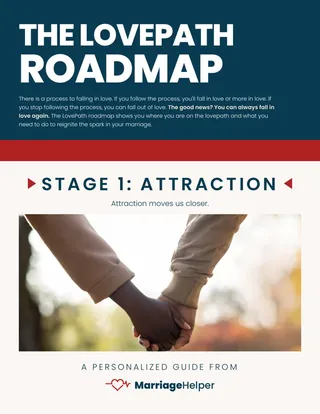
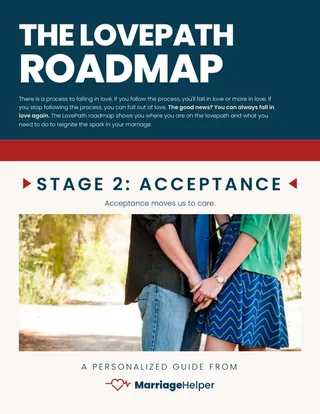
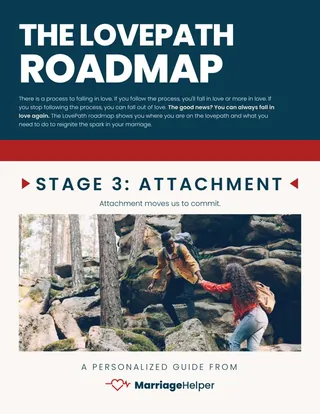
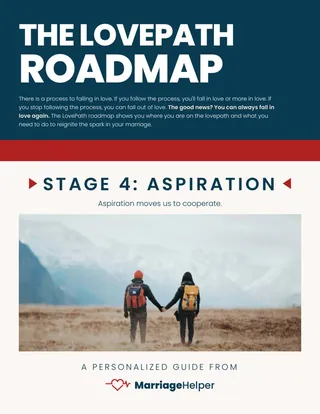
Think back to when you and your spouse were dating. Something about them drew you in. The way they looked, the way you talked, the things you had in common, the way they made you feel. At Marriage Helper, we call the process you followed the LovePath, and it moves through four stages.
It starts with attraction. When we’re attracted to someone, we want to get closer. As we get closer, we feel safe enough to be honest, and that’s acceptance. When they hear our hard things and don’t run, we care more, and we move into attachment, where we trust and commit. And then aspiration, where we dream up a future together. When you were dating, all of that happened naturally. The wedding, the house, the kids. Those were the aspirations pulling you forward.
And then you got them. And something quietly reversed. I call it the undoing.
The very things that had been pulling you together, you now had. So the date nights stopped. You got comfortable. You stopped doing the things that first made you attractive, physically, intellectually, emotionally, spiritually. And it got worse than just stopping. The compliments slowly turned into complaints. “Why did you load the dishwasher that way? How could you wear that?” The things you’d never have said while you were dating, you started saying without a filter. Maybe your spouse started saying them to you.
Here’s the hard part. You can’t save a marriage by the things you stop doing. But you also can’t save it without stopping the things that are hurting it.
The good news: love can be rebuilt
Here’s the good news, and I need you to really hear it. Falling in love is a process. And if your spouse fell in love with you once, they can do it again. It’s absolutely possible, and honestly it’s easier the second time. No matter how hopeless you feel right now, falling back in love can happen.
There’s one detour on the LovePath worth naming: sometimes a spouse has fallen for someone else and is being pulled out of the marriage. That’s limerence, and it changes the timeline, but it doesn’t change the hope.
”Why do I have to change?”
This is the part where a lot of people stop me. “Are you telling me that I’m the one who needs to change, when my spouse is the one who filed, the one having the affair, the one drinking too much?”
I get that comment on so many of my videos. So let me say it as gently and as honestly as I can: two things can be true at once. Your spouse can be doing something genuinely wrong, something inexcusable. And at the same time, you can have contributed to where your marriage is now.
I know, because I was that person. I’ve been CEO of a company called Marriage Helper for years now, and there was a time I was sure my husband was the whole problem. He was drinking too much. He was getting angry at everything. He was the one who needed to change. I was on a high horse: I’m not the one. I’m not the one. I’m not the one.
But here’s what I was actually doing. When he’d come home from a brutal day, exhausted, and just need a little time to himself, I’d follow him around the house asking why he didn’t want to be with me. I had given up my friends, my family, my college, my dream job to move overseas for him, and I had been alone all day, and all I wanted was to feel like he loved me. So when he walked in and went to read or be quiet, I cried, I pleaded, I begged. And the more he pulled back, the more I amped it up. He was doing something wrong. And I was playing a part too, not in his choices, but in mine. Until I could see that, nothing was going to change.
What I finally had to do was stop making my whole identity about whether he was responding to me the way I wanted. Because if that’s where your self-worth lives, you’ve put your spouse somewhere no person can survive. The healthiest marriages aren’t two people who are codependent, and they aren’t two people who are totally independent. They’re interdependent: I can live without you, but I don’t want to have to. That’s the sweet spot.
The PIES: the four areas of attraction
The only way to get there is to work on what I call the PIES: physical, intellectual, emotional, and spiritual. Four areas of attraction, and you are the one who controls every single one of them, not your spouse.
Physical is how you care for yourself: sleep, energy, health, looking and feeling your best for your age and stage. It isn’t about competing with anyone else or pretending to be twenty years younger. It’s being the best you can be, and it does something for your own confidence, too.
Intellectual is being an interesting person to talk to again instead of being consumed by what your spouse is or isn’t doing. Moping doesn’t move anything. Learning, growing, and getting good at something does.
Emotional is being a safe place to be around, evoking emotions in your spouse that they actually enjoy feeling, because if they don’t like how they feel around you, they won’t want to come back. Guilt and shame repel. Strength, friends, laughter, and real joy attract.
And spiritual is your values, your purpose, who you’re becoming, finding your identity in something that doesn’t move. When people are being left, some start drinking heavily, some act out, some turn mean. Letting go of what you hold dear makes you someone else, and not someone more attractive. Hold on to who you are.
I dig into all four, with the stories behind them, in this breakdown of the PIES.
Working on your PIES is where rebuilding love begins. But hear me clearly: the PIES is only the first step. A marriage isn’t built on the PIES alone. It makes you the best you that you can be, and that’s the foundation, but you also have to learn how to actually love again. The PIES is where you start, not where you stop.
Push and pull: become the magnet
Underneath all of this is one principle: push and pull. Marriages work like magnets.
When you’re evoking emotions your spouse doesn’t like, you push them away. And the harder you push, the further they run. You can’t force two magnets together by shoving. It doesn’t matter how right it feels to plead, to beg, to chase, to track their phone, or to use guilt, money, or sex to make them stay. There was a woman who followed her husband out to the driveway as he was leaving and banged her head on the pavement until it bled, and to her shock, he still left. Of course he did. Pushing harder never pulls someone back.
There’s a quieter push, too. When your spouse knows you’ll be there waiting and longing no matter what they do, you become their safety net. If the new life doesn’t work out, they can always come back to the one who’s waiting. That gives them very little reason to think hard about what they’re doing. A spouse who sees that you’ll be okay, that you’ll keep living and growing with or without them, has a reason to stop and look again.
The only way to turn it around is to become the person your spouse can’t help but be drawn toward. That’s a pull. And the stronger the magnet, the stronger the pull, even from far away.
The way I like to explain it: in the Australian outback, farmers have so much land that fencing it is impossible. So instead of building a fence to keep the cattle in, they put a well in the middle. The well is the source of life, and the cattle stay near it because they want to. We want you to be the well in your marriage. Not the fence trying to force your spouse to stay, but the thing they want to come back to. We say it at Marriage Helper all the time: people don’t leave what they have unless they believe what they’re going to is better. So be the better.
What to do this week
You don’t have to wait on your spouse to begin. Here’s where to start.
One, get control of your emotions. When you panic, you lose. You lose your cool, your patience, and your attraction, because no one is drawn to a person who is freaking out. So before you do anything, calm your body. Use 4x4 box breathing: breathe in for four seconds, hold for four, breathe out for four, hold for four, and repeat for about three minutes. The research shows it helps reset the fight-or-flight part of your brain so you can think clearly again.
Two, stop pushing and chasing. Write down three things you’re doing that evoke negative emotions in your spouse, and stop doing them. The most common pushes are pleading and begging, going cold and starting fights to get a reaction, withholding affection or sex as punishment, and hovering, tracking, and controlling. They feel like they make sense. They don’t. And even if you find what you’re looking for on their phone, then what? Changing how you talk and stopping the pushes is part of what we call Smart Contact.
Three, work on your PIES. It’s easier to stop a bad habit when you have a good one to put in its place. So as you stop the pushes, start building yourself back across those four areas. That’s the thing that gives you something to focus on, and it’s where love starts getting rebuilt.
And while you do those three, keep a few things in front of you:
- Don’t let your spouse’s words decide your stance. “I don’t love you anymore” is how they feel right now. Feelings change. Don’t try to read meaning into every text and every mood. It will drive you crazy.
- Remember the people who still need you. Your marriage matters, but it isn’t the only thing that gives your life value. You’re still a parent, a son or daughter, a friend, a coworker. Don’t disappear on them.
- Choose who you confide in carefully. Most people will love you by telling you to give up. Find a few who will stand with you. And don’t trash-talk your spouse to everyone you know. Poisoning the well can make it harder for them to come home.
- Get legal advice if you need it. Protecting yourself and your kids doesn’t mean you’re giving up, and it doesn’t mean you have to file.
For the full how-to, with all seven steps laid out, read 7 ways to save your marriage.
What standing for your marriage alone looks like
We’ve worked with just about every marriage situation you can imagine. Decades of conflict. Affairs, and spouses still in love with the other person. A pregnancy from an affair. Couples living like roommates with no attraction left. We’ve seen those marriages saved, and in every one of them, one spouse was willing to stand and made it possible for the two of them to come back together.
The people we’ve worked with who saved their marriage when they were the only one trying had three things in common. They stuck with it long enough. They were willing to change. And they actually made the changes last.
Give it time. Change rarely happens on the timeline you want, and you will be tempted to quit more than once. One woman’s husband moved thousands of miles away and wanted no part of the marriage. Her kids were hurting. Everyone around her said it wasn’t going to work. She decided she still wanted her marriage, learned what we teach, and put it into practice. She became a stronger, steadier version of herself, to the point that she told herself, “I’m going to be okay no matter what happens.” Four years after he left, her husband called and asked if he could come home. She forgave him, they reconciled, and today she helps other people who are standing where she stood.
I can’t promise you that ending. Nobody honestly can. What I can tell you is that if you do this work, it will change you, and that is the best thing you can bring to your marriage either way.
When to get help
Standing alone doesn’t mean doing it alone. The people who make it through almost always have someone in their corner: someone who knows the principles and can tell them when they’re pushing without realizing it.
One exception, and it matters. If you’re being abused or you’re not safe at home, standing for your marriage is not the step. Your safety is. Get safe first.
If you’re ready to start, two places to begin. Take the free LovePath quiz to see where your marriage is on the four stages of love and what to work on first. And if you want a coach walking with you, we have coaching that starts with you, even if your spouse isn’t ready.
Why I believe in marriages everyone else has written off
Before I was born, my dad left my mom. He was a well-known pastor with a speaking schedule booked five years out, and he fell in love with someone at his church, got fired, and divorced my mom. During the three years they were divorced, he lived out of his car, became an alcoholic, and was in and out of the hospital after overdoses. Everyone said that marriage was unsalvageable. They were right to think so.
But my mom did three things. She forgave him, and I think that mattered most, because it let her breathe instead of being held hostage by what he’d done. She worked on her own PIES without even knowing that’s what it was called, getting a job for the first time and becoming top salesperson at the store that hired her. And she refused to poison the well by trash-talking him to everyone around her.
Three years later, my dad woke up one day, realized he didn’t like who he’d become, and asked my mom to take him back. Everyone in her life told her not to. Her best friend said she’d never speak to her again. My mom took two weeks, prayed about it, and said yes anyway, because she believed he was a good person who had done a lot of bad things and deserved a second chance. They remarried and learned to fall in love again.
Two things came out of that. One of them was me. The other was Marriage Helper. So when I tell you there’s hope for your marriage, understand that I owe my life to two people who didn’t give up. Whether or not you’re a person of faith, I believe reconciliation is possible in situations everyone else has written off, because that’s exactly what I’ve watched happen over and over.
It starts with you
So here’s the real question, and only you can answer it. Do you want to save your marriage more than you want comfort? Because looking honestly in the mirror and changing your own habits is hard, and you can avoid all of it by telling yourself the grass is greener somewhere else. I’ve watched friends do exactly that. They left without ever doing the work, and they carried the same patterns straight into the next relationship, and it ended up in the same place. The grass wasn’t greener. Their own grass just needed water.
If you do this work, it’s a win-win. If you become your best self and the marriage isn’t saved, you’ve still become the best version of you. And if you become your best self and it is saved, you’ve kept the relationship you stood up and promised before God, family, and friends. That’s what happened for me.
You can’t control the other person. You can only control you. So start there. Get calm. Name the three things you need to stop. Begin working on your PIES. And don’t wait, because a marriage doesn’t get better by being left alone. If it was going to fix itself, it already would have.
There is always hope. It just starts with you.
Common questions
Can one spouse save a marriage?
One spouse can start saving a marriage, and often that is how it begins. A marriage is two people, so you can't make the choice for your spouse. But calming down, getting clarity, stopping your pushes, and forgiving don't require them. That first half changes the odds, and it changes you either way. Rebuilding trust and intimacy is the part that takes both of you.
How do I save my marriage when my spouse doesn't want to?
Start with you, because you are the only person you can control. Stop the things that push your spouse away: pleading, guilt, chasing, tracking their phone. Get calm, and work on your PIES so you become someone they're drawn back toward. And don't make yourself a safety net they can always fall back on. A spouse who knows you'll be okay either way has a reason to think twice.
My spouse filed for divorce. Is it too late to save my marriage?
Filing does not mean it is over. It is a piece of paper, not the end. My own parents were divorced for three years before they remarried. What makes the difference is not the paperwork, it is whether you start doing the things that rebuild attraction and trust. Some of the people we see save their marriages are the ones whose spouse had already filed.
Why do I have to change when my spouse is the one who wants out?
Because you are the only person you can control. Two things can be true at the same time: your spouse can be doing something genuinely wrong, and you can still have contributed to where the marriage is now. Owning your part is not taking the blame for everything. It is changing the one thing you actually have power over, which is you.
What does it mean to stand for your marriage alone?
It means staying grounded and working on yourself even when your spouse is cold, distant, or gone, without trying to force or control them. The people we've worked with who saved their marriage alone had three things in common: they stuck with it long enough, they were willing to change, and they made those changes last.
Can you go to marriage counseling or coaching alone?
Yes. You don't need your spouse in the room to start. When you're the only one trying, the work that matters most is the work on your side of the marriage: getting calm, stopping your pushes, and becoming your best self. Help that starts with you, even if your spouse isn't ready, is built for exactly that.
 The Save My Marriage™ Course The full framework for the spouse working alone, when your spouse will not engage yet. Twelve lessons, the complete system, start to finish. See what's inside, $397