
Does Couples Therapy Work After Cheating? (What You Need to Know Before Hiring a Therapist)
The short answer
”, you’re not alone. Many couples in crisis want to know whether therapy is truly effective, and whether therapy vs coaching might be the better path for their situation.
Key takeaways
- When spouses experience betrayal, many wonder whether marriage counseling or couples therapy is the right solution.
- The short answer is yes, couples therapy can work after cheating.
- In addition to couples therapy, marriage therapy can help spouses understand unhealthy patterns and create healthier ways to connect.
- On the other side of therapy and counseling is an approach called marriage coaching.
- Yes, your marriage and relationship can go back to normal after cheating, but this shouldn’t be your end goal.
If you’ve ever wondered “does couples therapy work?” or asked yourself “how does marriage counseling work?”, you’re not alone. Many couples in crisis want to know whether therapy is truly effective, and whether therapy vs coaching might be the better path for their situation. This article will help you understand the differences, benefits, and limitations of each approach so you can make an informed decision about what will best support you and your marriage.
Cheating in a marriage leads the relationship between spouses into unknown and unsettling territory, far from the path of trust and mutual understanding.
Infidelity is a deeply painful and disorienting experience that often leaves spouses questioning the future of their relationship.
In the face of this turmoil, couples therapy is a common option for saving the marriage.
It offers a structured way to navigate through the hurt and confusion.
But two questions remain: does couples therapy work after cheating? And how does marriage counseling work when an affair is involved?
This guide will answer whether couples therapy can be effective in saving a marriage faced with infidelity. We’ll also cover a few considerations to take into account before hiring a therapist.
Marriage Helper is here to help you save your marriage. Explore our workshops and see why we help 70% of our clients stay married.
Additional Context on Couples Therapy vs Marriage Counseling
When spouses experience betrayal, many wonder whether marriage counseling or couples therapy is the right solution. While these two approaches are often used interchangeably, they serve slightly different purposes.
Couples Therapy vs. Marriage Counseling:
- Couples therapy typically goes deeper, exploring underlying emotional wounds and helping spouses rebuild trust after serious challenges like infidelity.
- Marriage counseling often focuses on resolving day-to-day issues, strengthening communication, and preventing divorce.
Both can be valuable options depending on whether the couple wants practical solutions, deeper emotional healing, or both.
Does Couples Therapy Work After Cheating?
The short answer is yes, couples therapy can work after cheating.
But the long answer is a bit more complicated.
The journey to healing and rebuilding trust after infidelity is deeply personal. And it often requires more than therapy sessions alone.
Couples therapy provides a structured and safe environment for both spouses to express their feelings so they can start the process of understanding and healing.
However, the success of therapy also hinges on factors outside the therapist’s office.
Both spouses must be willing to engage in the process genuinely.
This means having the commitment to apply the insights and strategies learned in therapy to your everyday interactions.
Moreover, the recovery process may involve additional resources and support systems, from individual counseling and marriage coaching to relying on a strong network of friends and family.
So, while couples therapy can be a powerful tool in healing a marriage infidelity, it’s part of a larger ecosystem of recovery efforts.
The Role of Marriage Therapy in Infidelity Recovery
In addition to couples therapy, marriage therapy can help spouses understand unhealthy patterns and create healthier ways to connect. Many therapists report that couples who actively engage in relationship counseling after an affair have a higher chance of rebuilding a stronger, more resilient marriage.
Studies show that therapy focused on emotional rebuilding, such as Emotionally Focused Therapy (EFT), has one of the highest success rates in helping couples not only reconcile but also prevent future breakdowns.
For couples who want to fix my marriage after betrayal, combining structured therapy with accountability, personal growth, and coaching often yields the best results.
Couples Therapy vs Marriage Counseling
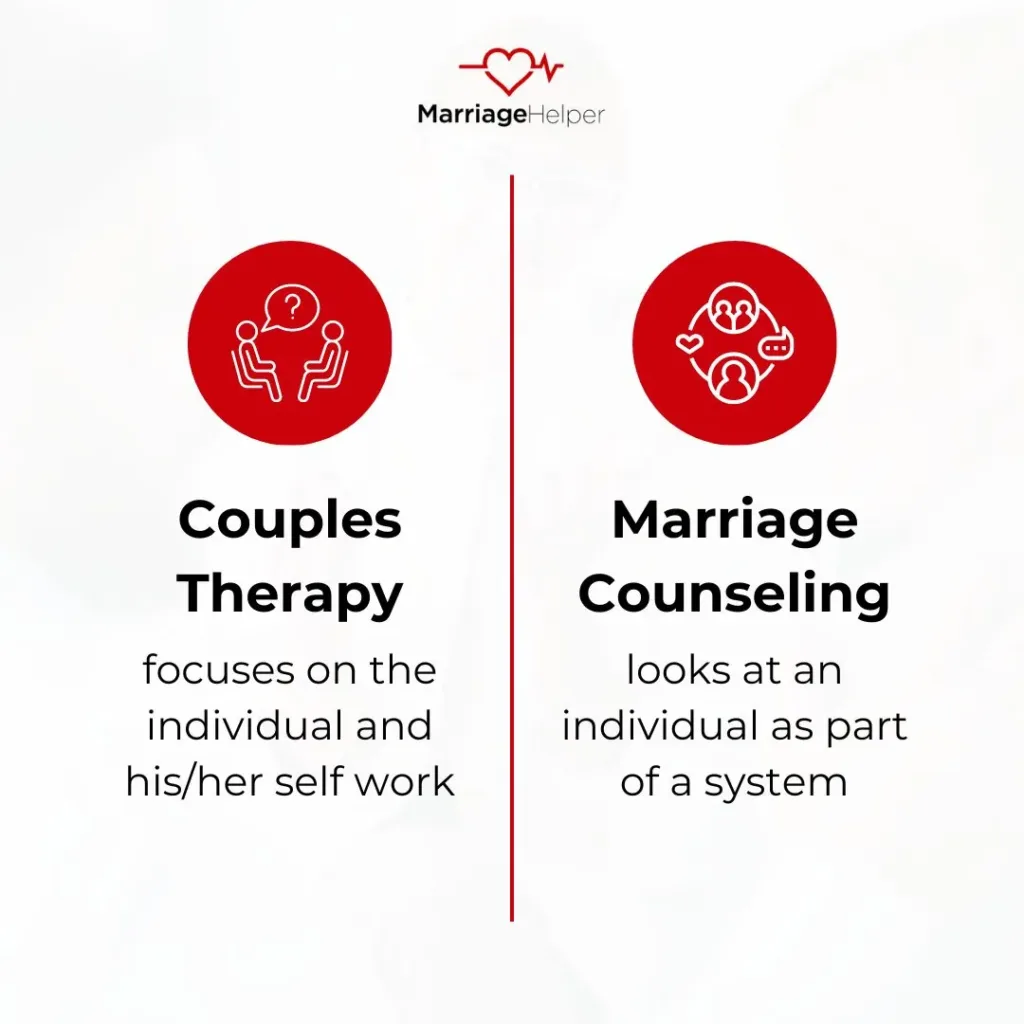
The difference between couples therapy and marriage counseling is the scope and focus of their approach.
Licensed Professional Counselors (LPCs), typically focus on the individual.
Their training is geared towards understanding the individual as a separate entity, exploring their thoughts, feelings, behaviors, and personal experiences.
For a spouse who wants to heal after being cheated on, counseling can offer much-needed guidance to help them forgive and move forward.
On the other hand, Marriage and Family Therapists (MFTs), are trained to think in terms of systems.
This means they view an individual not just independently but as part of a larger unit, like a family or a couple.
They help couples understand how each spouse’s behaviors and attitudes impact the relationship as a whole.
Both counselors and therapists are trained in various modalities of therapy, such as emotionally focused, behavioral, and narrative, among others.
These different approaches have their unique ways of addressing issues.
Some may delve into exploring feelings and examining the past. While others might be more focused on future-oriented solutions and specific actions to move forward.
It’s important to recognize that counseling and therapy are not one-size-fits-all solutions and certainly not a “quick fix.”
So you need to find a professional whose approach aligns with your needs, values, and situation.
Things can get more complicated if your chosen therapist or marriage counselor brings in their personal biases that might translate to bad advice.
This is just one of the perils of counseling that you need to keep in mind.
For instance, if you and your cheating spouse want to save the marriage but your counselor is advising you to look at other options, then there is a clear misalignment.
And it can do more harm than good to your marriage.
Benefits of Marriage Counseling Beyond Infidelity
While this article emphasizes cheating, marriage counseling is also effective for couples struggling with:
- communication breakdowns
- intimacy loss
- parenting conflicts
- financial stress
- work-life imbalance
By addressing these issues early, counseling helps couples save your marriage before problems escalate into separation or divorce.
Therapy vs Coaching: The Benefits of Marriage Coaching
On the other side of therapy and counseling is an approach called marriage coaching. This is what we apply with our clients here at Marriage Helper.
What makes marriage coaching different is it focuses on prompting and guiding, not just listening.
It’s about becoming a thinking spouse who helps you step back from your emotions.
When we sit with you, our goal is not to be swayed by your emotions but to help you see things more clearly.
We work with you to identify and manage your expectations and communicate them in a way that your spouse can understand.
After all, unmet expectations often lead to hurt and frustration. And it’s one of the reasons why spouses cheat in the first place.
Coaching also offers a perfect space for challenging your self-limiting beliefs.
Most of us tend to have a negative internal dialogue. But with coaching, you can work to rewrite this narrative.
By shifting how you perceive yourself, you can bring about positive changes in your behavior. And consequently, in your relationship.
This can make it easier for a cheating spouse to acknowledge their mistake wholeheartedly and take steps to rebuild their marriage.
If you’ve tried therapy unsuccessfully or can’t find a marriage counselor, consider exploring marriage coaching.
Couples Therapy Success Rate and What to Expect
Many couples ask: What’s the success rate of couples therapy? According to the American Association for Marriage and Family Therapy, most couples report improved communication, reduced conflict, and higher relationship satisfaction after therapy.
However, the success rate also depends on:
- both partners’ willingness to participate fully
- the therapist’s approach
- how committed the couple is to apply what they’ve learned outside of sessions
This means marriage counseling and couples therapy can work, but only if the spouses are ready to commit to real change.
Can a Relationship Go Back to Normal After Cheating?
Yes, your marriage and relationship can go back to normal after cheating, but this shouldn’t be your end goal.
This is because “normal” might have included undiscussed issues or unmet needs that contributed to the infidelity to begin with.
Returning to how things were might mean ignoring existing problems that need to be addressed.
Instead, the aim should be to evolve your relationship into something stronger and more fulfilling.
Your marriage after infidelity should be about creating a new normal. One that involves greater communication, deeper understanding, and renewed commitment.
This process might include establishing new boundaries or adjusting the dynamics of your relationship.
It’s an opportunity to learn from the past and build a future that’s more aligned with both spouses’’ needs and expectations.
Remember, there’s always a way to save your marriage even when you’ve lost hope.
Marriage Therapy vs Coaching: 3 Factors For How To Choose a Marriage Counselor or Coach
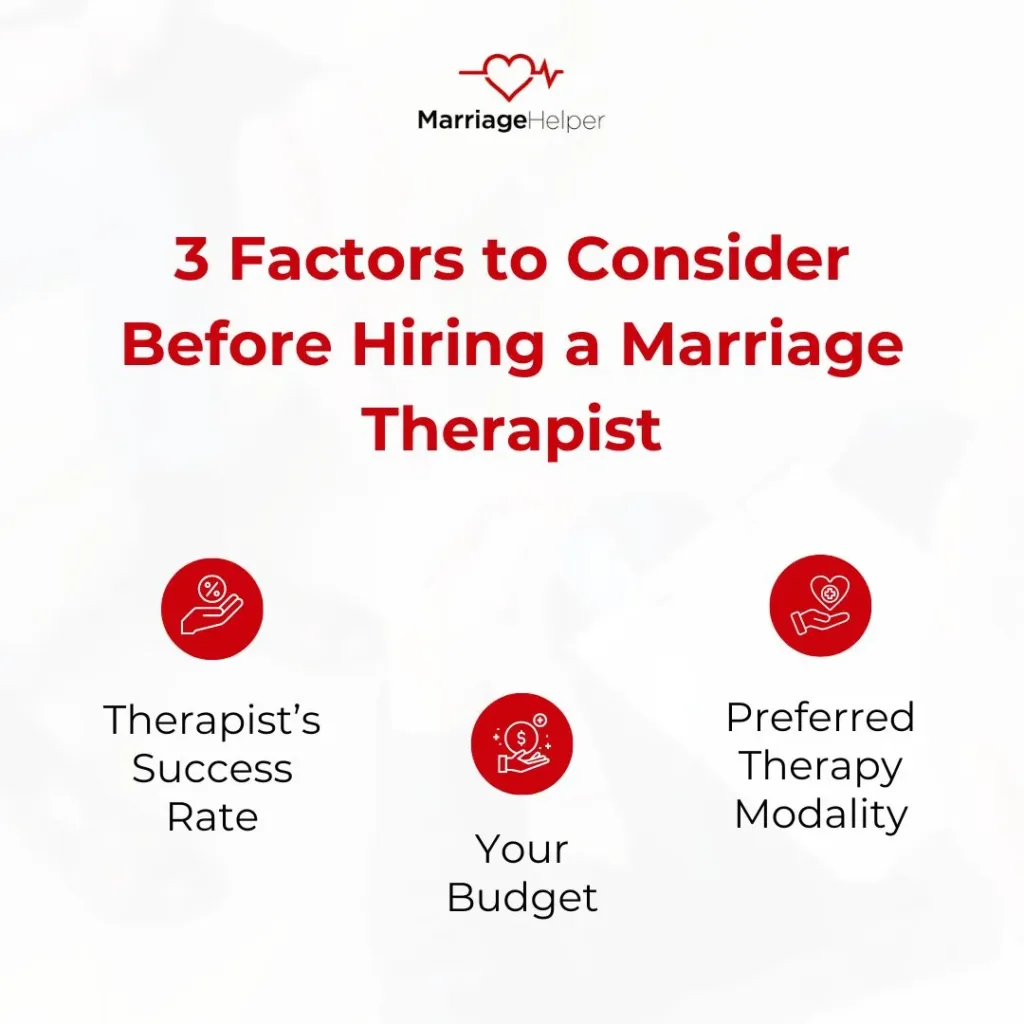
The Therapist’s or Coach’s Success Rate
A therapist’s effectiveness can often be gauged by the number of couples they’ve helped through issues and achieved positive outcomes.
It’s important to look for a therapist whose approach and success stories resonate with your specific marital challenges.
You can ask for reviews, testimonials, or even referrals.
Though we don’t offer therapy, Marriage Helper has a 70% success rate with our marriage coaching and workshop approach.
We have helped 3 out of 4 couples save their marriage and stay together even after a spouse was unfaithful.
But keep in mind that the AAMFT (American Association for Marriage and Family Therapy) code of ethics doesn’t mention “saving a marriage” as an indicator of a therapist’s success.
This means that “successful therapy” isn’t measured by how many couples a therapist has helped stay together or avoid divorce after cheating.
It only measures if either spouse is “feeling better” after the sessions.
Your Budget and Price Point
It’s important to consider how much you’re willing to invest to get the most value out of a service.
Balancing the cost with the potential benefits is key to making a decision that aligns with both your financial means and your relationship goals.
Traditional counseling and therapy sessions typically cost more, with prices ranging from $150 to $300 per session.
The first session, often an intake session, can be more expensive.
Marriage coaching can be a more budget-friendly option. Instead of paying for single sessions, you can pay for a package.
For instance, Marriage Helper’s 3, 6, or 12 coaching session packages are included when you sign up for our marriage workshop. Compared to standard per-session counseling fees, you can save from $100 to $507 or even more.
Modalities Used by the Therapist
Different therapists employ various modalities, such as emotionally-focused therapy, cognitive-behavioral therapy, narrative therapy, or a blend of different approaches.
It’s important to choose a therapist whose methods resonate with both you and your spouse.
Some couples may benefit more from a solution-focused approach, while others might need a therapist who can delve deeper into emotional processing.
Understanding the modalities used by the therapist will help you make an informed decision about the best fit for your marital healing.
There’s More than One Way to Save Your Marriage
While couples therapy can be an effective tool in the aftermath of infidelity, it’s important to remember that there’s more than one way to save your marriage.
Marriage coaching, with its forward-thinking and practical approach, offers an alternative path that many couples find to be more aligned with their needs.
It focuses on actionable strategies so you and your spouse can make proactive, positive changes in your relationship.
If you’re exploring ways to heal and strengthen your marriage, we invite you to consider the resources available at Marriage Helper.
Our workshops and online membership offer comprehensive support and guidance.
You’ll get the necessary tools and insights for a successful journey towards marital recovery and fulfillment.
Common questions
Does Couples Therapy Work After Cheating? (What You Need to Know Before Hiring a Therapist)
”, you’re not alone. Many couples in crisis want to know whether therapy is truly effective, and whether therapy vs coaching might be the better path for their situation.